From Digital File to Stitched Reality: An Honest Take on DONUT Wake Me Up
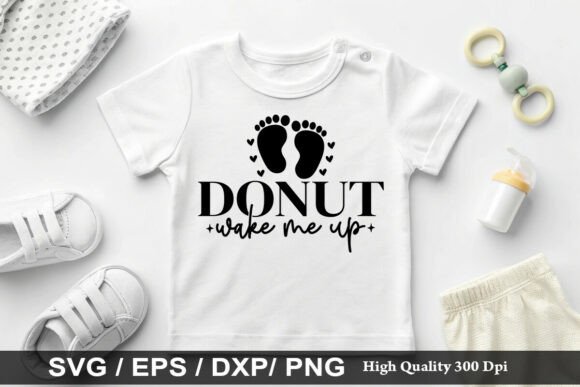
When a design file lands on my desktop, my first task is always to imagine it not as pixels, but as stitches. So when I sat down to evaluate DONUT Wake Me Up for a potential embroidery project, I put myself in a very specific scenario. I was picturing a custom baby announcement tote bag for a boutique client—something cheerful, modern, and unmistakably handmade.
The Immediate Mood and Visual Personality
The design strikes a playful, sweet, and gently whimsical tone right away. The central theme creates a mood of celebration and cozy new beginnings, which is exactly the feeling you want for baby-related items. Its layout feels balanced, not overly crowded, which is a great starting point for embroidery. The level of detail seems thoughtful; there’s enough character to be interesting, but not so many tiny elements that they’d become a stitching nightmare. This visual personality leans towards giftable and approachable—it doesn’t try to be too minimalist or too overwhelmingly ornate. It naturally belongs to projects meant to evoke warmth and a bit of fun.
A Natural Fit for Real-World Projects
Thinking through my real-life embroidery situations, DONUT Wake Me Up immediately suggests itself for a range of applications. Beyond the obvious T-Shirt Designs, I’d confidently consider it for a soft baby sweatshirt, a decorative pillow cover for a nursery, or a kitchen towel as a quirky gift for new parents. It has the charm to work as a standalone feature on a tote bag or as a sweet accent on a baby blanket. For craft business items, this kind of Graphics can be a staple—it’s versatile enough for Etsy listings, craft fair products, and personalized gifts from a small shop.
Where it might shine most, in my opinion, is on products where the embroidery itself is the star. A simple, high-quality cotton tee, a linen apron, or a canvas tote bag would let those stitches pop. The design’s personality would translate well into an embroidered patch, too, which could then be applied to various items. In terms of commercial embroidery projects, it feels like a safe bet for customer engagement—it’s recognizably cute without being generic.
Where This Design Requires a Careful Hoop and Thread
Not every design can go everywhere, and a practical review means pointing out the careful spots. For DONUT Wake Me Up, I’d be cautious about very small hoop sizes. If any lettering is present (and the title suggests there might be), tiny text needs exceptional stitch clarity to remain legible. I’d avoid putting it on highly textured or very stretchy fabrics without extensive testing, as the shapes might lose definition.
Dark fabric backgrounds demand a thoughtful thread color plan—you need strong contrast for the playful mood to survive the stitch. Layered garments like caps or curved surfaces require careful stabilizer choice to keep the design from distorting. And for any product destined for frequent washing, like baby clothes or kitchen linens, you’d need to ensure the stitch density is appropriate to withstand wear without becoming too stiff.
The Impact on Your Craft and Your Customer
How a design performs in the hoop directly affects everything downstream. With a clean, well-balanced design like this, your stitching clarity is likely to be high, which in turn boosts the perceived value of the finished product. It looks professional and intentional. That builds customer trust and reinforces a positive handmade presentation.
For a small business owner or Etsy seller, using a design with strong visual appeal aids in brand consistency—if your niche is playful, heartfelt gifts, this fits the portfolio. Its giftability is inherent. For the end buyer, seeing this on a product creates an immediate, positive engagement; it’s easy to understand and connect with. In short, it’s a digital embroidery file that, if stitched well, can turn into a commercial embroidery asset that people actually want to buy or receive.
Practical Notes From the Embroidery Desk
Before I’d ever load this machine embroidery design for a client project, my process would involve a few non-negotiable steps. First, always test on scrap fabric of the same type you plan to use. This reveals how the fill stitch areas behave and whether any satin stitch or running stitch details need adjustment.
Check thread color contrast rigorously. View the design in black and white mockups to assess value separation, and compare how it would look on both light and dark fabric texture backgrounds. Use the proper stabilizer for your chosen project—don’t skip this. Inspect any small details in the file preview; if there are extremely fine lines or corners, consider if your machine and thread can render them cleanly.
Crucially, confirm the licensing before selling any finished items. The product description mentions it’s designed for cutting machines, but for embroidery use, you must verify that the embroidery file or the converted design is cleared for personal and commercial projects. This is the foundation of a responsible craft business.
The Final Stitch: A Design Worth Hooping
My overall judgment of DONUT Wake Me Up is positive. It feels like a design that understands its role—it’s meant to be stitched onto things that will be loved, gifted, and used. It avoids excessive complexity that can sabotage an embroidery project, while retaining enough character to stand out.
For embroidery designers and makers, it represents a practical choice. It’s likely to stitch out cleanly, appeal to a broad audience, and adapt to several product types. My imagined custom baby tote bag? I’d proceed with that project. With the right fabric, thread, and a careful test run, I believe this design would result in a charming, high-quality handmade product that a client would be delighted with. That’s the real test, and from my point of view, DONUT Wake Me Up seems ready to pass it.