King of Char BBQ: A Designer’s Stitched Review
First Impressions: Bold, Friendly & Ready for the Grill
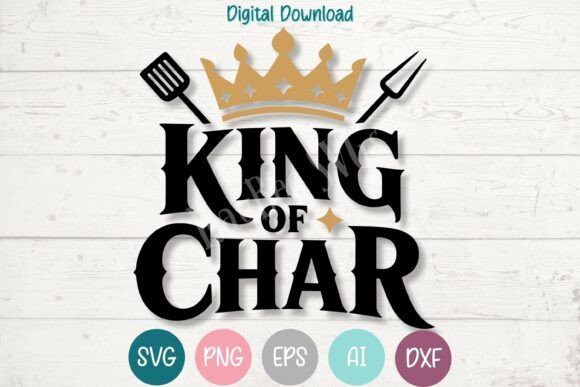
Opening the King of Char BBQ design, the immediate vibe is cheerful and unpretentious. The central character—a cartoonish, crowned king holding a spatula—has a welcoming, almost celebratory personality. The layout is straightforward and balanced, with clear shapes and text that isn't overly cluttered. This isn't a minimalist, subtle graphic; it's a statement piece meant to be seen and enjoyed. It feels inherently social, tied to gatherings, good food, and a bit of playful pride. For an embroidery designer, that first glance tells me this belongs on items meant for use, display, or gift-giving in casual, happy settings.
The Natural Canvas: Where This Design Stitches Up Best
In practical terms, this design feels destined for project categories where its theme enhances the object's purpose. Imagine a custom, embroidered apron for a grill master—the design becomes a functional badge of honor. A heavyweight cotton tote bag for carrying barbecue supplies gains a personalized, handmade touch. For a client project, like a set of kitchen towels or a pillow cover for a rustic-themed home, it adds a cohesive decorative accent. As a small business owner crafting merchandise for a local food festival or a boutique selling handmade goods, this design on a sweatshirt or cap creates recognizable, themed apparel. The scale and detail level suggest it would be excellent for a standalone feature on the center of a garment or bag, rather than a small, repetitive motif.
Real-Life Scenario: A Custom Embroidered Gift Tote
Let's walk through a real case. I'm considering this for a custom embroidered tote bag as a Father's Day gift. The client wants something sturdy, personalized, and fun. Using the King of Char BBQ design, I'm thinking through the stitching. The bold outlines of the king and the crown should translate well into satin stitch or a clean running stitch border, creating a crisp silhouette. The text "King of Char" needs to be evaluated for clarity—in embroidery, small, thin lettering can get lost or become overly dense. I'd plan to test the stitch density on scrap fabric first, ensuring the fill stitches for the main body aren't so heavy that they distort the bag's canvas fabric. The final product would feel like a high-value, thoughtful gift because the design is integral to the item's use; it tells a story.
Performance on Fabric: Practical Considerations for Makers
For embroidery, the success of any digital file lies in its translation from screen to stitches. With a design like this, certain applications require careful planning. On textured fabrics like a thick sweatshirt, the raised stitches will interact with the fabric's weave, which can add charm but may blur very fine details. On stretchy fabrics like t-shirts, adequate stabilizer is non-negotiable to prevent puckering around the denser filled areas. Embroidering on dark fabric demands a thoughtful thread color contrast study—the design's playful mood could be muted if the colors don't pop. Curved surfaces, like the front of a cap, present a challenge for the design's potentially wide layout; checking the available hoop size and the design's dimensions beforehand is crucial.
The small details, like the tiny features on the king's face or the narrow parts of the spatula, are where a hands-on review matters. In my test run, I'd inspect these areas after a sample stitch-out to ensure they remain clear and don't merge into a blob of thread. This directly affects the final product's visual appeal and perceived quality. For commercial embroidery projects or for crafters selling finished products on Etsy, clarity in these details builds customer trust and reinforces the professionalism of the handmade presentation.
Designer Notes for a Smooth Stitch-Out
- Always stitch a test on scrap fabric of a similar weight and texture to your final project.
- Evaluate thread color choices against both light and dark background fabrics; sometimes a design needs slight color adjustments for optimal contrast.
- Check the effective stitch density, especially in filled areas, to avoid overly thick patches that can be stiff or cause fabric distortion.
- Confirm the design's size compatibility with your intended hoop and the curvature of your item, like caps or baby clothes.
- Use the appropriate stabilizer for your fabric type—this is key for maintaining design integrity on stretchy or thin materials.
- Before selling any finished item or digital product using this embroidery file, verify the licensing terms provided by the seller for commercial use.
The Bigger Picture: Value, Engagement & Brand Fit
Beyond the technical stitch-out, using the King of Char BBQ design impacts the broader project. For a creative entrepreneur, it can become a core design asset for a line of barbecue-themed products—aprons, patches, apparel—creating brand consistency. Its inherent giftability makes it a strong candidate for holiday or wedding gifts for the culinary enthusiast, potentially driving higher buyer engagement in a small shop or at a craft fair. As an embroidery designer working on client projects, offering a well-executed, themed design like this elevates the perceived value of the service; it shows an understanding of niche interests.
However, its specific theme means it should be used where it fits naturally. It might feel out of place on delicate baby clothes unless intentionally paired with a rustic nursery decor item, like a blanket. On a formal garment, it would clash. Its strength is in its niche. For digital product sellers creating printable mockups or offering the file itself, the design's clear, friendly aesthetics make for attractive previews that communicate the final embroidered product's potential mood effectively.
A Confident Choice for The Right Project
Reviewing the King of Char BBQ SVG PNG from a maker's perspective, it's a design that invites confident use when its theme aligns with your project's purpose. It has the visual personality to stand out, the structural balance to stitch well on appropriate items, and the niche appeal to resonate with a specific audience. The practical work lies in the preparation—testing, planning for fabric type, and ensuring detail clarity. When those steps are taken, this embroidery file can become the centerpiece of a truly engaging handmade product, a personalized gift that delights, or a consistent element in a craft business's themed merchandise. It’s a graphic that asks you to think about the context, and when the context is right, the stitched result will likely be a winner.