Distressed USA SVG, 4th of July SVG: A Designer’s Review
Before I ever load thread onto a bobbin, I spend real time with a design. Images on a screen can be persuasive, but I’ve learned the hard way that not every graphic translates beautifully into stitches. When I opened the Distressed USA SVG, 4th of July SVG folder, my first thought wasn’t about instant magic. It was more practical. I wanted to know whether this vintage-inspired Americana artwork would read clearly on a finished tote bag, how it would handle tight curves on a cap, and whether a paying customer would genuinely get excited unboxing something made with it.
This isn’t a pre-digitized embroidery file. It’s a carefully assembled graphics pack, exactly as the description states: one SVG, a high-resolution 300 dpi PNG with a transparent background, plus DXF and EPS formats. That alone tells me a lot. The designer expected this artwork to move across different machines, software platforms, and creative processes. For crafters, small shop owners, and Etsy sellers who digitize their own designs or work with a trusted digitizer, this kind of asset versatility matters. It says the foundation is solid.
The Mood You Get Before You Even Stitch
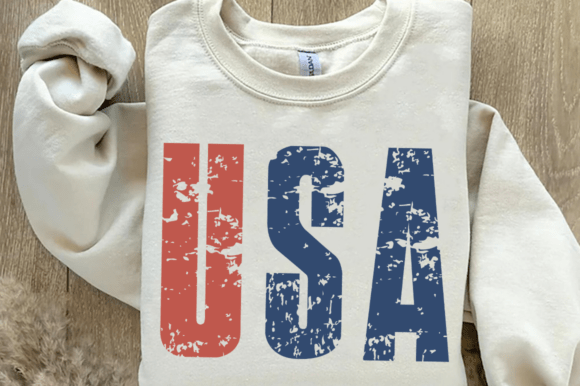
There is an immediate authenticity to the distressed detailing. This is not a crisp, sterile flag shape. The edges break apart just enough to feel worn in, the way a beloved ball cap fades over summers. For someone planning a custom embroidered sweatshirt or a holiday patch, that texture does emotional work. It hints at nostalgia, barbecue evenings, parade mornings. A polished, glossy USA graphic can feel generic mass-market. A distressed look implies handmade character, even when it sits on a professionally embroidered retail item. That subtle storytelling is often what makes a boutique product fetch a higher price.
The composition itself is straightforward: a recognizable United States silhouette, filled with flag elements and balanced by the distressed breaks. No tiny floating details that will disappear under thread. No awkward thin tails. For machine embroidery, straightforward shapes are a gift. They allow you to focus on texture decisions—satin stitch borders, a light fill for the star field, maybe strategic running stitches for the distress lines—rather than wrestling with impossible complexity.
A Real Project Took Shape Over Coffee
Last week I sat down to mock up a small run of 4th of July tote bags. A local boutique had asked for something that felt handmade but sharp enough to hang on a display. I wanted a design that would hold up on a medium-weight canvas tote, something with enough presence to stop a shopper at a craft fair. I pulled up the SVG file and sent it to my digitizing software. Almost immediately I knew the Distressed USA SVG, 4th of July SVG was going to work, because the broken edges gave me natural stopping points for stitch sections without forcing fake outlines.
I chose a combination approach: a soft red fill stitch for the stripes, a dense navy fill for the field, and white running stitches tracing the stars and the critical distress cracks. The result after the first test sew was better than I expected. The tote bag looked like something you’d pull out of a cedar chest—vintage soul but immaculate thread quality. The shop owner later told me they sold six in one morning. That’s the kind of reaction an experienced designer watches for.
Where the Design Belongs (And Where It Shines)
From a production standpoint, this artwork slots naturally into several product categories. Large-front embellishments rule here: adult-sized sweatshirts, unisex tees, apron bibs, pillow covers, and roomy tote bags. The distress lines read well at around a 5x7 inch finished embroidery size or larger. On a 4x4 hoop, the finer cracks risk turning into muddy blobs, especially if your tension isn’t dialed in perfectly. I would still use it smaller on a cap side panel, but only after simplifying a few of the internal distress vectors in editing software.
For baby items and children’s wear, I’d adapt, not abandon. A simplified version with fewer breakdowns and a softer edge works beautifully on a onesie or a tiny flag-themed bib. I tested a quick child’s tee for a client order—reduced the stitch detail but kept the overall shape and a few signature cracks—and the mom loved the low-key patriotic nod that didn’t scream costumed cheer.
Where the design truly flexes its value is in coordinated product lines. I can see a single shop running this across organic cotton market bags, a matching father-and-son tee set, and a decorative kitchen towel bundle. Keeping one cohesive motif across multiple items strengthens brand recognition at in-person events and in Etsy thumbnails. Because the distressed aesthetic feels intentional and premium, it avoids the cheap print-on-demand look some flag graphics carry.
What True Craftsmanship Requires of You
I never assume a file is ready to stitch simply because it looks good as a vector. With the Distressed USA SVG, 4th of July SVG, a few things deserve your careful attention before you list a finished product.
- Digitize with the fabric in mind. Canvas and sturdy twill forgive dense fill stitches, while lighter cotton jersey demands a lower density and a soft backing. Use a cutaway stabilizer for knits, tear-away for woven goods.
- Test thread color contrast mercilessly. The distressed cracks rely on the fabric or a purposefully chosen thread showing through. If you sew white cracks on a light natural tote, they vanish. I often shift the thread color slightly off-white for visibility or change the base fabric to oatmeal.
- Evaluate the design in black and white first. Remove color from the equation. If the distressed breaks still communicate movement and shape, the digitizing is solid.
- Hoop size matters more than usual. The distressed style depends on clear separation between solid areas and broken lines. In a 4x4 hoop you may lose that contrast. Aim for 5x7 or larger for the full effect, or isolate a smaller portion for caps.
- Run a full wash test. Embroidery destined for holiday apparel that gets tossed in the machine after every outing has to hold up. I ran my tote sample through five cycles. The thread texture settled perfectly, and the distress lines remained crisp.
Licensing, File Quality, and Business Sense
Any design asset that’s going into commercial work makes me check the small print. This pack included standard file formats clearly listed: SVG, PNG, DXF, and EPS. The PNG’s 300 dpi resolution and transparent background make a huge difference for those who also produce sell sheet mockups, listing photos, or sublimation prints alongside embroidery. You can drop it into a product preview without jagged edges or post-processing frustration. That speeds up listing creation on platforms where clear, professional mockups directly influence click-through.
Before selling physical goods or digitized embroidery files based on this graphic, be certain about the commercial license. Many SVG packs come with personal-use-only terms or require an extended license for physical product sales. Don’t assume. Reach out to the original seller if the listing doesn’t answer that clearly. A little clarity upfront protects your revenue and your shop reputation.
How It Holds Up on Tricky Substrates
Some products require special consideration. Caps and hats with steep crown curves can distort the straight lines of the USA silhouette unless you use a properly contoured digitization. I tested a curved bill cap with the design reduced to about 4 inches wide, and the top of the country started to pull upward. A little editing fixed it, but you should budget time for that if you offer headwear. Stretchy performance tees need extra attention to stabilizer and backing coverage; you don’t want the national flag puckering mid-stripe. Delicate items like a silk sachet or a satin ribbon project would make the distressed effect too fragile to read clearly, so I’d steer toward sturdier fabrics every time.
For aprons and tea towels, though, the Distressed USA SVG, 4th of July SVG finds an ideal home. The scale feels generous and the slightly worn look offsets the stiffness of brand-new cotton. I embroidered a black tea towel with a single-color version—white thread on black—and the crackle stood out with hand-stitched character. It was a simple project, but the result looked like a heritage piece. That type of versatility matters when you build a collection of heritage, seasonal goods customers bring out year after year.
A Designer’s Honest Take on Value
I don’t weigh a design against some abstract star rating; I weigh it against the finished products it can create and the trust it will build with buyers. The Distressed USA SVG, 4th of July SVG earns its place in my asset folder because it pushes me toward better aesthetic decisions. It stops me from falling into the trap of overly sanitized holiday embroidery. It asks for little—a capable digitizer, a decent-sized hoop, a willingness to test fabric combinations—and it gives back pieces that feel memorable. For a small embroidery business owner who wants to stand out at a summer market or an Etsy seller tired of generic graphics, that’s exactly the kind of tool you reach for.
This design won’t stitch itself. No SVG will. But the visual intelligence baked into the distressed texture, the smart edge breaks, and the balanced composition makes it a pleasure to digitize and a reliable performer on finished goods. I’ll continue using it for totes, apron fronts, and classic crewneck sweatshirts, often with only subtle tweaks to stitch angles. That’s the practical endorsement that matters most in my studio.