4th of July Hotdog American Flag Graphics for T-Shirt Designs
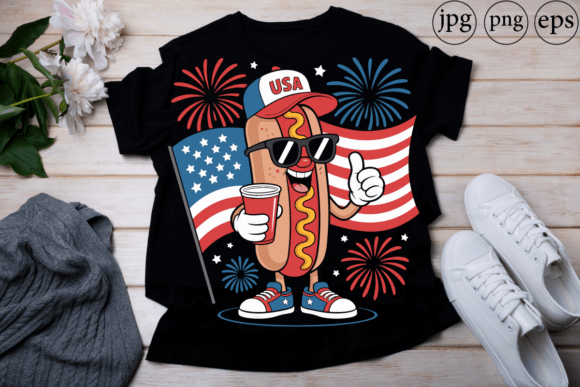
When I opened the 4th of July Hotdog American Flag file for the first time, I immediately felt the energy of a backyard barbecue, the kind of summer celebration that brands love to capture in seasonal campaigns. The graphic brings a playful, slightly nostalgic mood that feels unapologetically American without being overly formal. As a brand designer, I look for assets that communicate clearly within a split second, and this one does exactly that. The hotdog paired with flag elements creates an emotional tone that balances humor and patriotism, making it suitable for casual branding, lifestyle content, event promotions, and commercial marketing materials where approachability matters more than corporate polish.
What This Graphic Communicates Before Anyone Reads a Word
Visual communication starts with instinct. The 4th of July Hotdog American Flag triggers recognition almost instantly. The combination of food imagery and flag motifs signals celebration, comfort, and shared cultural moments. For a brand, this matters because your audience decides whether to stop scrolling in less than a second. A graphic like this creates curiosity and warmth, drawing people into your message before they even process your headline. In my experience testing seasonal visuals across social platforms, designs that blend familiar symbols with a touch of personality consistently outperform generic stock imagery. This asset delivers that blend naturally, which is exactly what content creators and small business owners need when competing for attention during holiday marketing windows.
How the Asset Performs in Real Marketing Workflows
I tested the 4th of July Hotdog American Flag inside several mock campaign scenarios to understand where it shines and where it requires careful placement. Here is how it performed across different marketing and branding applications:
- Social media graphics – Works exceptionally well for Instagram posts, Facebook ads, and Pinterest pins where bold, recognizable visuals stop the scroll.
- T-shirt designs – The high-resolution output and included vector formats make this a natural fit for apparel graphics, especially for seasonal merchandise drops.
- Packaging accents – Small food brands launching limited-edition summer products can use this on labels, hang tags, or insert cards to reinforce a festive product story.
- Email banners – Placed as a hero graphic, it sets a celebratory tone for holiday sale announcements or event invitations.
- Digital ads – The clear focal point supports strong visual hierarchy in ad creatives where the message must land quickly.
- Printable promotions – Event flyers, posters, and coupon designs benefit from the graphic's bold presence and high-resolution clarity.
- Editorial design – Blog graphics, media kits, and lead magnets gain personality without overwhelming the surrounding content.
- Canva templates – The PNG and SVG versions import cleanly into template workflows for designers and non-designers alike.
- Stickers and merchandise – The graphic translates well to physical products beyond apparel, including mugs, tote bags, and decals.
- Website headers – Seasonal landing pages or announcement bars can use the asset to reinforce time-sensitive messaging.
The Emotional Tone and Audience Perception Factor
Marketing visuals shape how people feel about your brand before they read a single word. The 4th of July Hotdog American Flag leans into a lighthearted, celebratory mood that attracts audiences looking for fun, tradition, and community. For brands selling handmade products, food items, family-oriented services, or lifestyle goods, this emotional alignment strengthens audience trust and makes the brand feel more human. When I design campaign visuals for clients, I constantly ask whether the graphics make the brand feel more accessible or more distant. This asset pulls audiences closer. It creates a sense of shared experience that polished corporate graphics often miss entirely.
Where the Design Asset Delivers the Strongest Results
Based on my workflow testing, the 4th of July Hotdog American Flag performs best as a hero graphic, campaign header, or product launch visual. It anchors branded templates beautifully, works as a social media cover image, and integrates into packaging design without competing against the primary product. For small business owners preparing a content bundle or planning a seasonal promotional blitz, this asset functions as a versatile centerpiece. The included vector formats make scaling effortless, while the PNG version with transparency allows fast placement over any background in Canva, Photoshop, or Illustrator. Content creators who build marketing visuals for multiple platforms will appreciate how easily the graphic adapts across different dimensions without losing impact.
Practical Limitations and Where to Use Caution
Every design asset has boundary conditions. The 4th of July Hotdog American Flag is not suited for formal corporate branding, dense information layouts, or environments where minimalism defines the brand identity. If your brand aesthetic relies on muted tones, negative space, and understated typography, this graphic may feel intrusive rather than complementary. I recommend caution with small mobile graphics where the detail in the flag and hotdog elements could reduce legibility at tiny scales. Text-heavy ads also present challenges because the graphic demands visual attention and could compete with the main message rather than support it. Low-contrast backgrounds wash out the vibrancy of the design, so always test placement against your specific color palette before finalizing campaign assets.
Pairing the Graphic with Typography Styles
One of the first tests I run with any design asset checks how it interacts with different font families. The 4th of July Hotdog American Flag responds differently depending on your typography choices:
- Sans serif fonts – Clean, modern type balances the playful illustration and keeps the overall composition professional enough for commercial use.
- Serif fonts – Traditional serifs amplify the nostalgic Americana feel, creating a vintage editorial look suitable for lifestyle brands.
- Script fonts – Flowing scripts paired with the graphic lean heavily into handmade, craft-brand energy, perfect for boutique labels and event signage.
- Handwritten fonts – Casual handwritten type reinforces approachability and works well for social media graphics targeting family audiences.
- Display fonts – Bold display type creates a poster-like effect, ideal for merchandise and T-shirt designs where the graphic takes center stage.
Supporting Marketing Goals Through Visual Consistency
Stronger first impressions, clearer visual hierarchy, and more consistent branding do not happen accidentally. They result from thoughtful asset selection and placement. The 4th of July Hotdog American Flag supports these goals by offering a recognizable focal point that can anchor a campaign across multiple touchpoints. When your audience sees the same graphic on your Instagram post, your email banner, and your packaging insert, recognition compounds. Consistency builds audience trust faster than any single marketing message could alone. For small business branding, this asset provides a professional appearance without requiring custom illustration work, which matters enormously when budgets and timelines are tight.
Checking the Technical Specs Before You Commit
As a brand designer, I always verify file formats, resolution, and licensing before integrating any graphic into client work. The 4th of July Hotdog American Flag includes PNG, EPS, and SVG files in high resolution, which covers almost every use case from digital ads to physical merchandise. The vector formats preserve clean edges at any size, making the graphic suitable for large-format printing like banners or posters. The PNG version provides transparency for easy layering over any background texture or color. Before using this in paid campaigns, client deliverables, or business branding, confirm that the commercial license covers your intended use. This step protects your brand from legal exposure and ensures you can confidently scale your marketing without restrictions.
Integrating the Asset Into a Seasonal Campaign Framework
Imagine a small food brand preparing a limited-edition summer sauce or seasoning. The marketing calendar calls for a week of social media teasers, an email launch sequence, updated website graphics, and packaging that feels special and collectible. The 4th of July Hotdog American Flag can thread through every touchpoint: as the hero visual on the product label, the centerpiece of Instagram posts, the header of the launch email, and the decorative accent on printable recipe cards included with each order. This approach creates a unified campaign feel that looks intentional and professionally designed. The graphic does not just decorate the brand, it becomes part of the product story for the duration of the seasonal push.
Comparing Against Competitor Visuals During Seasonal Peaks
During Independence Day promotions, audiences scroll past dozens of flag-themed graphics. The 4th of July Hotdog American Flag stands apart because it combines patriotic symbolism with food culture in a way that feels authentic rather than forced. When I compare this against typical clipart or generic flag illustrations, the difference in personality is obvious. Generic assets blend into the noise. This graphic invites a second look. For brands competing in crowded seasonal markets, that moment of curiosity can determine whether a campaign meets its engagement targets or disappears into the holiday content flood.
Checking Readability, Balance, and Real-World Presentation
Before finalizing any design asset for campaign use, I test it inside real mockups. I place the 4th of July Hotdog American Flag on T-shirt templates, tote bag previews, social media frame mockups, and packaging dielines. I check how it reads at thumbnail size on mobile screens, how it balances against surrounding copy, and whether the colors maintain their vibrancy after exporting for web compression. I also test black-and-white versions to see if the silhouette remains recognizable for print scenarios with limited ink budgets. These checks prevent the frustration of discovering visual weaknesses after production deadlines have passed. The asset holds up well across most tests, though I recommend previewing at actual production size for any print application to confirm detail clarity meets your standards.
Why This Graphic Deserves a Spot in Your Design Asset Library
Every content creator and brand owner eventually faces the moment where they need a seasonal graphic that communicates instantly, scales across formats, and feels professional without requiring hours of custom work. The 4th of July Hotdog American Flag fills that gap for Independence Day campaigns, summer product launches, and patriotic-themed visual content. The versatility of having vector and raster formats in a single package, combined with the commercial clarity of the included file types, makes this a practical addition to any creative design workflow. Whether you are building social media graphics in Canva, designing merchandise for a seasonal drop, or refreshing your brand's digital presence for a holiday push, this asset delivers the visual impact and emotional connection that effective marketing visuals demand.